CEO Brief: Africa’s Renaissance, The Full Potential on Show at Africa Energies Summit
As we make the final preparations for the 9th Edition of the Africa Energies Summit | Africa’s Premier Global Upstream Conference | 11th - 14th May 2026, it would be remiss of me not to focus on Africa this week. In the many recent conversations with companies and government partners, one point has come through clearly: Africa has the potential for an upstream renaissance. This opportunity and what it will take to unlock is reflected in our strongest and most ambitious agenda to date.
From the beginning of my journey in preparing for this Summit, there are two things that matter most to me: who is in the room, and the agenda. If we get those right, everything else follows. That is where I focus, consistently raising the bar on both. I encourage you to review the details and request information from my team via the links below. What I will do here is share some perspective on the key themes shaping this year’s edition. I can safely say in both of my key metrics, this will be our strongest edition in our history. No pressure for "the decade" - our 10 year anniversary next year I will have to raise the bar yet again!
The main point for me this year is around that concept of renaissance: Africa is no longer being pursued as optional upside; it is becoming central to global exploration strategy to key players but there are difficult and significant challenges which must be overcome.
AES Agenda Feature: This sets the tone for Session 1: Africa’s Upstream in 2026 – Africa’s Place in a Competitive World and the Strategy Briefing Series, framing Africa’s role in the global capital race.
The Big Signal: Africa Is Now Central to Global Exploration
According to Rystad Energy, around 40% of all high-impact exploration wells globally in 2026 will be drilled in Africa , with activity concentrated along the Atlantic Margin, from the Orange Basin to the Gulf of Guinea. A majority (c.60%) of this sits in ultra-deepwater. This is portfolio-defining exploration strategy being played out, led by majors and increasingly supported by NOCs and independents. This reality sits behind the industry’s current focus: I think we can safely say that Africa is no longer being pursued as optional upside; it is becoming core to global reserve replacement. Africa is where the industry is going to find the next material barrels - not where it is going to defend legacy production.
AES Agenda Feature: Directly reflected in Strategic Investment Spotlights (Orange Basin, West Africa & MSGBC, Southern & East Africa) and the Leaders Panel: Africa in the Global Upstream Portfolio, where capital allocation decisions are unpacked.
Exploration Quality Over Volume
Rystad Energy is clear on a structural shift underway: exploration is becoming quality-led rather than volume-led. Operators are targeting scale, materiality and basin-opening potential, with frontier basins attracting disproportionate capital and technical focus. Discovery volumes have increased materially in recent cycles, and success rates have improved materially. Africa fits this model well as its basins offer the scale and geological potential that the industry is now prioritising. However, this only stacks up where opportunities are clear, investable, and capable of being developed at pace.
AES Agenda Feature: Underpins Technology as a Commercial Weapon and Africa’s Access to Production – Converting Acreage into Value, focusing on how subsurface quality translates into commercial outcomes.
The Capital Reality: More Selective, More Demanding
Analysis from S&P Global and Wood Mackenzie points to a more disciplined investment landscape, where capital allocation is increasingly selective and benchmarked globally. There is evidence that upstream investment growth has flattened and that capital is competing directly with low-carbon investment flows and other industries that offer better returns. At the same time, majors are reallocating capital back into upstream but only into projects that are material, competitive and executable. Capital is available but it is harder to access and far more demanding.
AES Agenda Feature: Central to Global Forces Reshaping African Upstream and the Leaders Panel, with a sharp focus on how Africa competes for capital on returns, risk and cycle time.
Africa’s Production Base: Material, But Under Pressure
Africa remains a critical part of global supply. According to Rystad Energy, production is expected to reach approximately ~11–12 million boe/d by 2026, but sustaining that level and building on it requires significant reinvestment. At the same time, Wood Mackenzie highlights ongoing decline pressures and underinvestment risks across key producing regions. Overlay that with rising global LNG demand, projected to reach ~755 mtpa by 2030 and Africa’s gas opportunity becomes increasingly strategic and important both as a growth generator for Africa and to satisfy growing global demand. Africa faces both a renewal challenge and a growth opportunity and must solve both simultaneously.
AES Agenda Feature: Shapes discussions across North Africa & Mediterranean, East Africa Gas, and LNG-focused dialogues, as well as Global Energy Demand & Supply – What Actually Matters for Africa.
The Basin Story
Industry focus is concentrating in specific basins such as Orange Basin (Namibia/South Africa) offering a global hotspot for large-scale, high-margin discoveries, MSGBC Basin emerging as a proven, competitive frontier, Nigeria / Angola / Mozambique anchoring production and capital deployment and East Africa Gas which is structurally important, but dependent on execution. We can see from this that investment and focus is concentrating on where there is scale, subsurface confidence and a credible stable path to development. We are reminded that Africa is a jigsaw of basins and opportunities, and only some are performing.
AES Agenda Feature: Directly aligned with the Regional Showcase Theatre and Strategic Investment Spotlights, where governments and operators position their basins for capital.
Final Thought
Africa is central to global exploration, increasingly relevant to supply, and positioned to play a defining role in the next cycle of upstream investment. In a world where capital is disciplined and competition is fierce, advantage will not be defined by the resource but rather the ability for the hosts and partners to move rapidly and predictably, at scale from discovery to development.
Africa does not need to prove that it has resource. It needs to prove that it can convert it into value. Competitiveness has never been about one factor but about how the whole system works together ; from policy, and data through to delivery; the above and below ground conditions must be in tune so that the basins can sing.
AES Agenda Feature: This is the core thread of Policy as a Competitive Advantage, Contracts That Survive, and the broader Summit narrative: competitiveness is systemic and delivery is paramount.
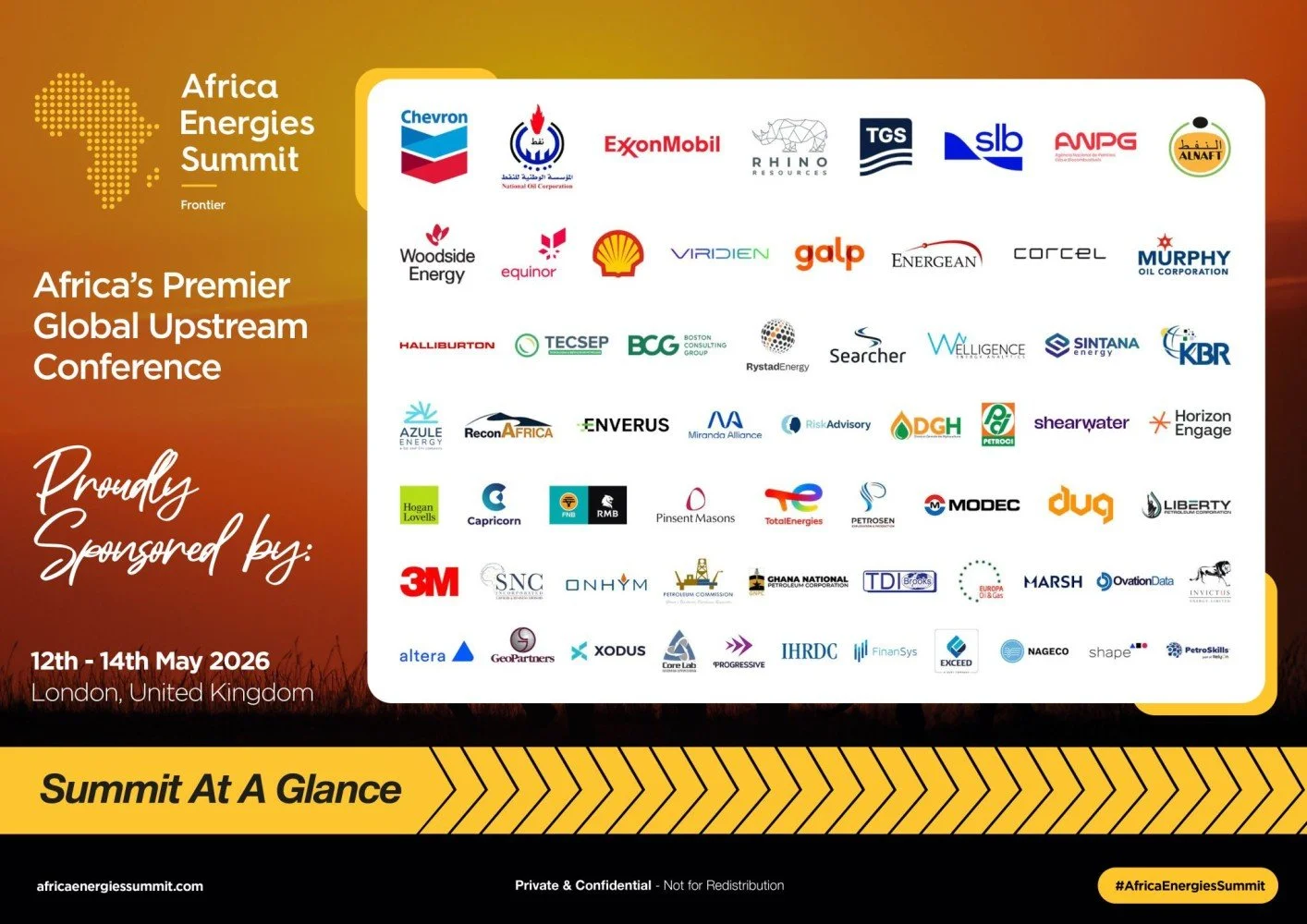
I really look forward to the moment when I welcome you all to the Summit, alongside 𝗛𝗶𝘀 𝗘𝘅𝗰𝗲𝗹𝗹𝗲𝗻𝗰𝘆 𝗗𝗶𝗮𝗺𝗮𝗻𝘁𝗶𝗻𝗼 𝗣𝗲𝗱𝗿𝗼 𝗔𝘇𝗲𝘃𝗲𝗱𝗼 who will deliver the Opening Ministerial Keynote Address on the 12th May. See you in London along with our wonderful Sponsors & Partners next month!